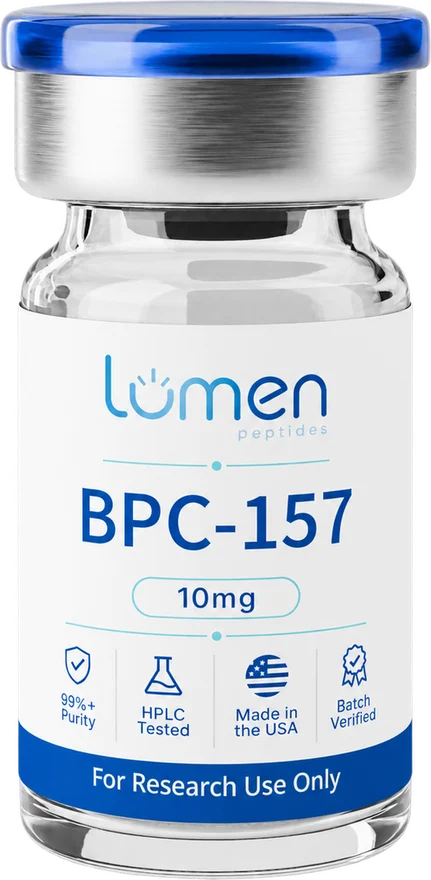

How to Store Lyophilized Research Peptides: Temperature, Light and Moisture Guidelines for the Lab
Last updated:
Store lyophilized research peptides sealed, cold, dry and dark. Keep sealed vials at 2 to 8 °C if you will open them within a few weeks and at −20 °C or colder for longer periods (−80 °C is preferred for long-term archives), in a closed container with desiccant, and let each cold vial reach room temperature unopened before you break the seal. This is the general laboratory guidance published by reagent manufacturers including Bachem and Sigma-Aldrich (Merck), summarized below with the reason behind each step.
Lumen Peptides ships lyophilized research peptides for in-vitro laboratory research only, not for human or veterinary use. Your laboratory's procedures take precedence over the general guidance below.
Peptide storage at a glance
| Condition | Typical lab guidance | Why |
|---|---|---|
| Room temperature (about 20 to 25 °C) | Sealed vials in transit or for short periods only. | Short periods at room temperature are generally less damaging to the dry solid than to a solution, but heat speeds degradation over time. |
| Refrigerator, 2 to 8 °C | Sealed vials you plan to open within a few weeks. | Bachem describes 4 °C as acceptable for short-term storage. |
| Freezer, −20 °C | Standard long-term storage in a steady, manual-defrost freezer. | Bachem recommends below −15 °C; Sigma-Aldrich recommends −20 °C or colder. |
| Ultra-low freezer, −80 °C | Long-term archives and sequences known to be unstable. | Sigma-Aldrich names −80 °C as preferred for longer storage. |
| Light | Store in the dark, in the original box or an amber vial. | Many peptides are light-sensitive (Thermo Fisher). |
| Moisture | Sealed container with desiccant; warm cold vials before opening. | Absorbed water lowers peptide content and may decrease stability (Bachem). |
| Air (Cys, Met, Trp) | Open only when needed; purge headspace with nitrogen or argon. | These residues are prone to air oxidation (Sigma-Aldrich). |
| Solutions for in-vitro work | Single-use aliquots, frozen at −20 °C or colder, thawed once. | Solutions degrade faster than dry powder; freeze-thaw adds stress. |
Why lyophilized peptides are more stable than peptides in solution
Lyophilization (freeze-drying) removes water from a frozen peptide sample under vacuum, leaving a dry, porous solid. The reactions that degrade peptides, including backbone hydrolysis and deamidation of asparagine and glutamine, need water and molecular mobility. In a dry solid both are scarce, so these reactions slow sharply compared with the same peptide in solution, a pattern reviewed by Manning and colleagues in Pharmaceutical Research.
That lyophilized peptide stability is conditional. Bachem notes that peptides tend to be hygroscopic: the dry cake pulls moisture from room air, which reduces peptide content and may decrease stability. The sealed, dry powder is the most stable form the material will be in, and every handling step aims to keep it that way.
Four temperatures to know
Room temperature: transit and short periods
Shipping conditions vary by supplier and compound: some ship sealed lyophilized vials at ambient temperature, others on cold packs or dry ice. Treat room temperature as a waypoint, not a storage location. Move vials to cold storage when they arrive.
2 to 8 °C: short term
A laboratory refrigerator suits sealed vials you plan to open within the next few weeks. Bachem describes 4 °C as acceptable for short-term storage of lyophilized peptides.
−20 °C: standard long-term storage
A freezer is the standard place for sealed lyophilized peptides kept longer. Bachem recommends below −15 °C, with lower temperatures preferred, and Sigma-Aldrich recommends −20 °C or, preferably, −80 °C. Choose a manual-defrost freezer where possible, since frost-free models warm up on their defrost cycle.
−80 °C: long-term archives
For archives, reference lots and unstable sequences, an ultra-low freezer is the most conservative option. Many labs keep working stock at −20 °C and archive material at −80 °C.
Sealed, cold, dry and dark: managing moisture and light
Keep vials sealed and dry
Keep each vial sealed in its original packaging until you need it. A closed secondary container with a desiccant pack adds a second barrier against humidity. When you open a vial, Bachem recommends weighing out material quickly and resealing tightly.
Warm the vial to room temperature before opening
A vial taken straight from the freezer and opened in room air is a cold surface, and water vapor condenses on the powder inside. Let the vial reach room temperature unopened, ideally in a desiccator, before breaking the seal. Bachem, Sigma-Aldrich and Thermo Fisher all describe this step.
Protect from light
Store vials in the dark; the original box is a good place. Sigma-Aldrich advises storage away from bright light, and Thermo Fisher notes that many peptides prove to be light-sensitive.
Laboratory water (L-H2O)
L-H2O, the sterile laboratory water Lumen supplies, is stored as its label directs: sealed and away from heat and light. Once opened, follow the in-use period on its label and keep it closed between uses.
What shortens a peptide's life: oxidation and deamidation
Bachem lists peptides containing Asn, Gln, Met, Cys or Trp as having limited shelf lives, which is why peptide shelf life varies so much between sequences. Two chemical pathways explain most of it.
Oxidation: cysteine, methionine and tryptophan
Methionine oxidizes to methionine sulfoxide. Free cysteine thiols oxidize to disulfides, rapidly at pH above 7 according to Bachem. Tryptophan oxidizes on exposure to air and light. For these sequences, open vials only as often as needed. Sigma-Aldrich suggests purging the vial with nitrogen or argon before resealing, and Bachem recommends oxygen-free buffers when these sequences are in solution for in-vitro work.
Deamidation: asparagine and glutamine
Deamidation converts asparagine to aspartic or isoaspartic acid, typically through a cyclic succinimide intermediate, and converts glutamine to glutamic acid more slowly. It is fastest when asparagine is followed by a small residue such as glycine, and it speeds up with water, higher pH and higher temperature (Manning et al.). This is one reason dry, cold storage matters for these sequences.
Everyday habits that shorten a peptide's life
- Repeated freezing and thawing of the same vial.
- Opening a vial more often than needed, which lets in air and moisture.
- Heat and direct sunlight, for example a car or a windowsill.
Freeze-thaw cycles and aliquoting for in-vitro work
Each freeze-thaw cycle exposes material to temperature change and, if the vial is opened, to condensation and air. Sigma-Aldrich states that repeated freeze-thaw cycles should be avoided for both lyophilized peptides and peptide solutions.
Follow your laboratory's procedure. A peptide in solution for in-vitro work is less stable than the dry powder, and how long it keeps depends on the sequence and the solvent. General manufacturer guidance for laboratory solutions:
- Split material into single-use aliquots so each portion is thawed once (Thermo Fisher, Sigma-Aldrich).
- Keep frozen aliquots below −15 °C (Bachem) or at −20 °C or colder (Sigma-Aldrich). Bachem notes frozen solutions may be kept for a few weeks.
- Use sterile buffers, avoid pH above 8 and keep solutions away from light (Sigma-Aldrich).
- Discard leftover thawed material rather than refreezing it (Thermo Fisher).
Lumen does not publish reconstitution volumes or protocols. Your laboratory's procedures govern how material is prepared and handled.
How shipping temperature excursions are handled for lyophilized material
Shipping conditions for lyophilized peptides vary: some suppliers ship sealed vials at ambient temperature, while others use cold packs or dry ice. Prolonged high heat, such as a package left in a hot vehicle, is treated as an exception to document. Laboratories typically receive shipments in this order:
- Inspect each vial. Confirm caps and seals are intact and the powder looks dry.
- Record conditions. Note the arrival date and anything unusual about how the package was held.
- Store the same day at 2 to 8 °C or at −20 °C or colder, depending on when vials will be opened.
- Label each vial with its arrival date and the lot number from its certificate.
- Escalate significant excursions. Set the vials aside, compare them against the lot's Certificate of Analysis in the COA library and contact the supplier before using the material in experiments. Labs running critical work may confirm identity and purity in-house, for example by HPLC or mass spectrometry.
Dispatch timing and packaging for Lumen orders are on the shipping page.
Your certificate travels with your lot
Lumen publishes a third-party Certificate of Analysis for every lot in its COA library. Keep the lot number from the vial label with your storage records, so you can open the certificate at any time and match it to the material on your shelf. Every research peptide in the Lumen catalog ships lyophilized.
Frequently asked questions
How long do lyophilized peptides last?
There is no single shelf life. It depends on the sequence, residual moisture and storage temperature. Manufacturer guides describe lyophilized peptides as stable when kept sealed, dry and frozen, while sequences containing Asn, Gln, Met, Cys or Trp have more limited shelf lives (Bachem). Check the supplier's documentation for each lot.
Can lyophilized peptides be stored at room temperature?
Only for short periods such as transit. General laboratory guidance is to move sealed vials to 2 to 8 °C, or to −20 °C or colder, on arrival.
Is −20 °C or −80 °C better for long-term peptide storage?
Both are accepted. Bachem recommends below −15 °C with lower temperatures preferred, and Sigma-Aldrich names −80 °C as preferred for longer storage.
Why should a vial warm to room temperature before it is opened?
A cold vial opened in room air collects condensation on the powder. Because peptides tend to be hygroscopic, that water lowers peptide content and can decrease stability (Bachem).
How many freeze-thaw cycles can a peptide tolerate?
Plan for as few as possible. Sigma-Aldrich advises against repeated cycles, and Thermo Fisher recommends single-use aliquots so each portion is thawed only once.
Research use only
All Lumen Peptides products are sold for in-vitro laboratory research use only. They are not for human or veterinary use, not for use in diagnostic procedures, and have not been evaluated by the FDA. This page summarizes published manufacturer guidance and scientific literature on handling lyophilized research materials. It is not a protocol and makes no claim about the shelf life or stability of any specific product.
References
- Bachem. Handling and Storage Guidelines for Peptides. Bachem Knowledge Center.
- Sigma-Aldrich (Merck KGaA). Handling and Storage Guidelines for Peptides and Proteins. Technical article.
- Thermo Fisher Scientific. Important Information on your HeavyPeptides: handling and storage instructions (PDF).
- Manning MC, Chou DK, Murphy BM, Payne RW, Katayama DS. Stability of Protein Pharmaceuticals: An Update. Pharmaceutical Research. 2010;27(4):544-575.